
Davinci casino Plinko
Introduction
Plinko looks almost disarmingly simple at first glance. A ball drops from the top of the board, hits a field of pegs, changes direction again and again, and finally lands in a payout slot at the bottom. That is the whole visual premise. Yet in practice, Davinci casino Plinko creates a very specific kind of tension that many players notice within minutes: the interface is minimal, the rounds are fast, and the result feels visible from start to finish rather than hidden behind reels and symbols.
I find that this is exactly why Plinko has become so noticeable across modern online casino platforms in Canada and beyond. It strips away the decorative layer that usually surrounds casino entertainment and leaves the player face to face with probability, pacing, and risk settings. On the surface, it is one of the easiest best Davinci Casino games page for Canadian players to understand. Under that surface, it can produce very different sessions depending on board size, multiplier distribution, and the chosen risk level.
This article focuses specifically on Davinci casino Plinko as a game page topic, not as a broad casino review. My goal is practical: to explain what Plinko really offers, how its mechanics work, what kind of player experience it creates, and where its strengths and limitations become obvious in real play.
What Plinko is and why it draws so much attention
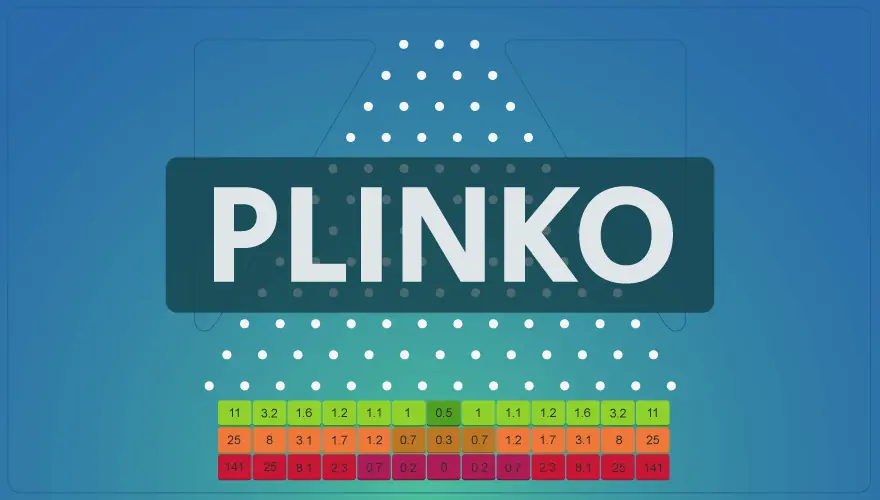
Plinko is a chance-based casino game built around a falling ball and a pegboard. The player usually chooses a stake, selects a level of risk, sometimes adjusts the number of rows, and then releases the ball. As it bounces left and right through the pins, the outcome gradually takes shape on screen until the ball lands in one of the payout cells at the bottom. Those cells carry different multipliers, from very small returns to occasional high-end results.
What makes this format stand out is not complexity but transparency. In many slots, the outcome is processed instantly and then revealed through animation. In Plinko, the animation is the event itself. That difference matters. The player watches the random path unfold in real time, and this creates an illusion of readability even though the result still depends on a random number generator. That combination of visible motion and hidden mathematical control is one of the most interesting aspects of the format.
Another reason Plinko attracts attention is rhythm. A round is short. There are no paylines to read, no bonus map to follow, and no need to memorize symbol values. This makes the entry barrier low, especially for players who do not enjoy dense slot interfaces. At the same time, the simplicity can be misleading. A board with a high-risk setting can feel calm for several rounds and then produce a sharp swing in either direction. In other words, Plinko is easy to start but not always easy to read correctly.
One observation I keep coming back to is this: Plinko often feels more “honest” than a slot because you see the full path of the ball, but mathematically it is not more transparent unless the player understands how risk mode and payout distribution reshape the board. That gap between visual clarity and statistical reality is central to the experience. To understand the wagering rules behind each offer, open best returning player bonuses at Davinci Casino next.
How the Plinko mechanic actually works in practice
At the core of Davinci casino Plinko is a simple chain of decisions and outcomes. The player sets the bet amount, chooses a risk profile, and in many versions selects the number of rows. Once the ball is dropped, it collides with pegs and moves left or right until it reaches a multiplier slot. The multiplier is then applied to the stake.
That sounds straightforward, but each setting changes the session in a meaningful way:
Bet size determines the financial weight of each drop. In a fast game, this matters more than many players expect because losses or returns accumulate quickly.
Risk level usually changes the payout map. Lower-risk setups tend to cluster more outcomes around modest multipliers. Higher-risk setups flatten the middle and push value toward the edges, where rare but larger multipliers sit.
Rows affect the path length. More rows usually mean more collisions, a broader range of possible landing points, and a different balance between common and uncommon results.
From a player’s point of view, the key thing to understand is that the ball’s movement is not a skill event. You are not controlling angle, timing, or force in any meaningful way. The bounce pattern is a visual expression of a random result structure. This does not make the game deceptive, but it does mean that “reading the board” has limits. A sequence of near-edge bounces does not indicate that a high multiplier is due next.
Here is a practical breakdown of the usual elements: For a closer look at the games library, current Davinci Casino poker information for online casino players sorts the titles by theme and pace.
| Element | What it changes | What it means for the player |
|---|---|---|
| Stake | Value of each round | Directly affects bankroll pressure during fast sessions |
| Risk mode | Distribution of multipliers | Changes whether results cluster in the middle or rely more on rare edge hits |
| Rows | Board depth and path complexity | Can alter both session feel and the spread of outcomes |
| Auto-play | Speed and repetition | Makes variance harder to track emotionally because rounds pass very quickly |
The bottom-row multipliers are the real heart of Plinko. Central slots often carry low returns, while outer slots may hold the largest values. Since the ball is statistically more likely to finish near the center than at the extremes, the board is designed around a familiar probability curve. This is why high multipliers can be visible for long stretches without being hit. They are part of the appeal, but not the baseline expectation.
Where the excitement comes from and how the pace feels during a session
Plinko creates engagement in a different way from reel-based entertainment. Instead of waiting for combinations, scatters, or feature triggers, the player gets a compact suspense cycle every few seconds. The ball drops, the path looks uncertain, the landing zone narrows, and the result is resolved. Then the process starts again. This loop is short, clean, and psychologically effective.
In real play, the tempo can feel almost deceptive. Because each round is easy to process, players often underestimate how many bets they place in a short period. That matters especially in auto mode or when using small stakes that seem harmless individually. A low-friction interface can make bankroll movement feel slower than it actually is.
There is also a distinct emotional pattern to Plinko that differs from slots. In a slot session, tension often builds around bonus anticipation. In Plinko, tension builds around trajectory. You are watching a result narrow down in front of you. Even when the payout is small, the visual path can make the round feel more dramatic than its actual value. This is one reason the game works so well for streaming and spectator content, but the entertainment value on screen should not be confused with favorable long-term return in a single session.
A second observation worth noting: Plinko often produces stronger emotional reactions from near-misses than many slots do. When a ball bounces one peg away from a top multiplier, the moment feels personal, almost as if the outcome could have been nudged. It could not. But the design is excellent at making randomness feel tangible.
How risky Plinko really is and what type of player it suits
Plinko can range from relatively mild to highly aggressive depending on the available settings. That is why broad statements about whether the game is “safe” or “volatile” are not very useful. The risk profile is adjustable, and that changes the experience substantially.
On lower-risk settings, results tend to cluster around smaller multipliers. This can create a steadier flow, though not necessarily a profitable one. The session may feel smoother because returns appear more often, but many of them are still below the original stake or only slightly above it. The practical takeaway is simple: frequent hits do not automatically mean meaningful recovery.
On higher-risk settings, the board usually offers more dramatic upside at the cost of longer dry stretches and sharper bankroll swings. This version of Plinko appeals to players who are comfortable with uneven sessions and who understand that the attractive top multipliers are rare by design. If someone enters high-risk Plinko expecting regular big returns, disappointment comes quickly.
In my view, Plinko tends to suit the following players best:
Players who enjoy short, fast rounds and immediate feedback.
Players who prefer simple controls over layered slot features.
Players who understand that visual suspense does not equal strategic influence.
Players who can set limits before the pace of the session takes over.
It may be a poor fit for those who want narrative progression, bonus rounds, expanding features, or a sense of tactical decision-making beyond choosing stake and board settings. If a player enjoys building toward free spins guide for Davinci Casino accounts or unlocking stages, Plinko can feel too bare after the initial novelty wears off.
What players should understand about probabilities and possible outcomes
The most important point about Davinci casino Plinko is that the board is not a fair visual spread where every slot has the same chance of being reached. Outcomes near the center are naturally more common because there are more possible left-right paths leading there. Edge multipliers are rarer because the path requirements are narrower. This is basic probability, but it is often overlooked when players focus on the highest visible numbers.
That is why the multiplier table should be read as a weighted structure, not a menu of equally available results. A 100x or 1000x slot may exist on the board, but its presence does not say much about how often it will be hit. The practical meaning is clear: the top end of the payout range is part of the game’s identity, yet most sessions will be defined by lower multipliers and repeated center landings.
It also helps to separate three ideas that players often blend together:
Hit frequency: how often the ball lands in a slot that returns something.
Multiplier quality: whether that return meaningfully covers the stake.
Session outcome: whether the sequence of drops leaves the player ahead or behind overall.
A board can produce frequent returns and still drain a balance if most results are too small. This is one of the reasons Plinko deserves a more careful reading than its toy-like appearance suggests.
For Canadian players trying the format for the first time, I would strongly recommend starting with a low stake and, if available, a demo mode. Not because the game is hard to understand, but because its pace can hide its statistical behavior. A short test run often reveals more than a long written explanation.
How Plinko differs from slots and other common casino games
The easiest comparison is with classic online slots, because that is where many players come from. Slots rely on reels, symbol combinations, paytables, and often layered bonus systems. Plinko removes almost all of that. There are no paylines to track, no wild substitutions to calculate, and usually no feature round that interrupts the base loop. The entire experience is concentrated into one visible event: the drop.
Compared with Davinci Casino roulette tips, Plinko shares the appeal of a quick result and a strong visual reveal, but it feels more kinetic because the outcome develops through movement rather than a spinning wheel. Compared with crash-style formats, Plinko offers less direct tension around timing decisions but more visual randomness. Compared with dice-based casino games, it is usually easier for casual players to follow because the board makes the probability structure feel concrete, even when that feeling is only partly accurate.
| Format | Main appeal | What Plinko does differently |
|---|---|---|
| Classic slots | Features, themes, bonus rounds | Uses a stripped-down loop with visible outcome progression |
| Roulette | Simple betting and quick resolution | Adds a path-based reveal that feels more dynamic on screen |
| Crash games | Timing and cash-out pressure | Removes timing decisions and focuses on pure drop randomness |
| Dice games | Direct probability-based outcomes | Presents randomness through motion rather than numbers alone |
The practical difference is this: Plinko is less about layered content and more about clean probability theater. If that sounds appealing, the format can be genuinely engaging. If not, it may feel repetitive faster than other casino games.
Practical strengths and weak spots of the format
Plinko has several real advantages, but they make sense only when viewed alongside its limitations.
Its biggest strength is accessibility. A new player can understand the basic loop almost instantly. That removes friction and makes it easier to evaluate whether the format fits their style. Another strong point is visual clarity. Because the result is shown through the ball’s movement, each round feels easy to follow. There is also flexibility in many versions thanks to adjustable risk levels and row counts, which can meaningfully change the tone of the session.
At the same time, the simplicity has a cost. There is limited progression. Once the player understands the board, future rounds do not reveal new layers in the way a feature-rich slot might. The excitement has to come from pace, tension, and multiplier distribution rather than discovery. For some players, that is enough. For others, it wears thin.
Another weak point is the way the format can encourage over-speed. Because rounds are short and the controls are minimal, it is easy to drift into a high-volume session without noticing how quickly the balance is moving. This is not unique to Plinko, but the game’s neat, clean design makes it especially easy to underestimate.
A third issue is expectation management. The board displays large multipliers very openly, and this can distort perception. Players may remember the possibility of a huge hit more vividly than the far more common lower-end outcomes. In analytical terms, Plinko is a game where visible upside can overshadow probable reality.
What to check before launching Davinci casino Plinko
Before starting a session, I suggest focusing on a few specific points rather than jumping in based on the game’s simple appearance.
Check the risk setting first. This one choice can change the entire feel of the board.
Look at the multiplier spread. Do not focus only on the highest number. Pay attention to where most of the lower and mid-range values sit.
Understand the session speed. If auto-play is available, decide in advance whether you really want that pace.
Set a bankroll boundary. Fast rounds can blur judgment, especially after a few near-misses.
Use demo play if offered. A short test can show whether the rhythm suits you better than any promotional description.
If the page uses the alternative spelling Da vinci casino in some interface elements or navigation paths, that does not change the core evaluation. The main question remains the same: does this version of Plinko present a board, risk structure, and pace that fit your style of play?
One final practical note: if you are the kind of player who likes to “read streaks,” Plinko is not a good place to trust that instinct. The visible path of the ball can make patterns feel meaningful when they are not. This is one of the format’s most persuasive illusions.
Final verdict
The volatility profile you select directly shapes the practical range of outcomes, so a low-risk setting can produce a long, grinding session rather than the quick resolution the game advertises. House-edge figures for crash-style and Plinko-derived titles typically land in the low single digits, but the effective cost per hour climbs steeply when you chain rapid rounds at a high stake. Session limits and loss caps are worth setting before you start, because the short round time makes it easy to double your intended exposure without noticing the accumulation. A sensible approach is to treat the session as entertainment with a fixed budget, since no probability setting changes the underlying mathematical expectation over many rounds.
That simplicity is both its advantage and its limit. For players who want quick rounds, minimal clutter, and a format where the tension comes from trajectory rather than bonus features, Plinko can be an excellent fit. For players who want richer structure, evolving mechanics, or more strategic involvement, it may feel too narrow after the first sessions.
The main caution is straightforward. Plinko looks light, but it can produce sharp swings, especially on higher-risk settings and in fast play. The board may seem transparent, yet the visible motion should not be mistaken for control or predictability. If you approach it with realistic expectations, sensible stake sizing, and a clear sense of your preferred pace, Plinko can be a compelling format. If you chase the largest multipliers without respecting how rarely they appear, the same simplicity that makes the game attractive can work against you.
In short, Plinko is not just a trendy board with bouncing balls. At its best, it is a clean probability-driven experience with a distinct rhythm and a surprisingly strong psychological pull. Whether that makes it worth playing depends less on hype and more on what you actually want from a casino session.
FAQ
How does the Plinko ball drop and multiplier outcome work?
A ball drops from the top and bounces along the board until it lands in a scoring slot. Each slot is tied to a multiplier, so the final landing position determines the result.
Where can the Plinko game lobby or casino games section be accessed after signing in?
Signing in opens the account menu, where the games lobby links are shown. From there, Plinko can be launched in real-money play or switched to demo mode if available.
What should players check before clicking Play on the Plinko table?
Confirm the selected mode shows demo or real-money play and that the stake or bet controls are set to the intended level. Also watch for the risk level indicator, since it can affect how aggressive the multipliers feel during rounds.
How does Plinko compare with other casino games like slots in terms of rules and pace?
Plinko is a quick ball-drop game where the outcome depends on the ball’s landing slot and the attached multiplier. Slot machines typically use reel symbols per spin, while Plinko uses a board path, so players should focus on round rhythm and table settings rather than symbol outcomes.